9/2/2026
THIS IS AN INHERENTLY UNSAFE PROPOSITION. I DO NOT RETAIN ANY LIABILITY FOR ANY DAMAGE YOU CAUSE TO YOURSELF, OTHERS, OR PROPERTY. I DO NOT HAVE ANY GUARUNTEES THAT THIS INFO WILL WITHSTAND THE TEST OF TIME OR IS RECREATEABLE
ok now that thats out of the way:
honestly a huge part of making a rocket is chasing down requirements that are semi-recursive. Want to go faster? you need more fuel. more fuel is more mass, and to accelerate it you'll need more fuel, etc. And the more fuel you add, the more shell volume you'll need, testing, etc. This has to stop at some point so we took it from a more bottom up approach. We decided to size and make a functioning engine first and then tackle the issue of making a rocket. Our primary goal was to hit at least a thrust to weight of > 2 for the engine (our prior summer failed in this regard, it didn't lift off at all.)
lets start with the anatomy of a rocket motor:
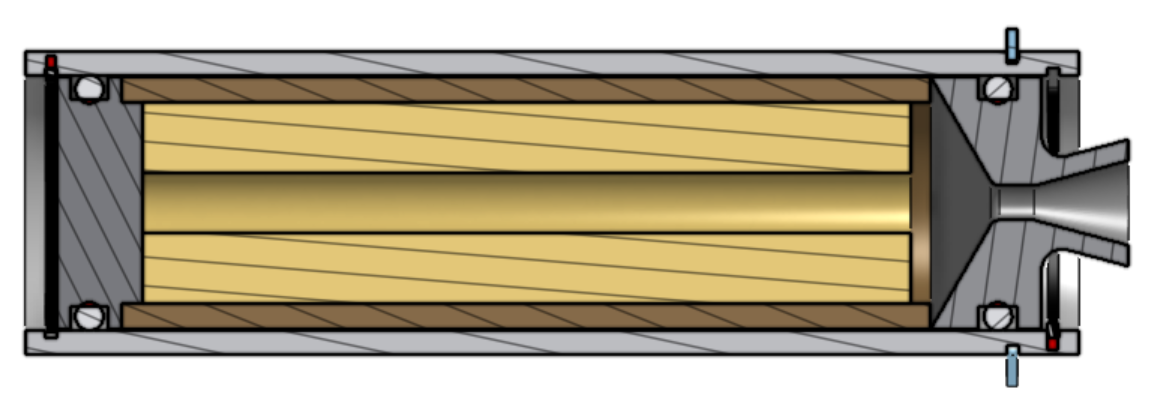
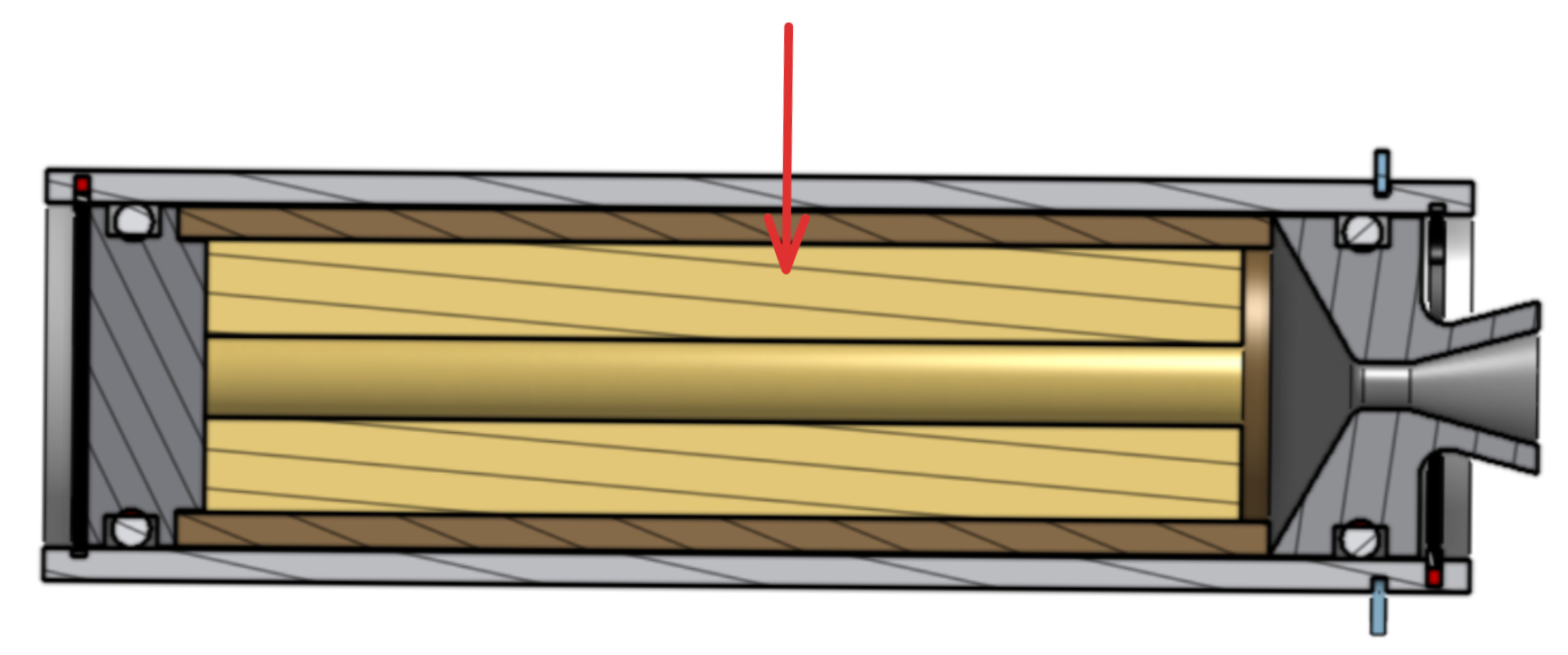
This is the overall stackup of a rocket motor. Currently the flamey end is to the right.
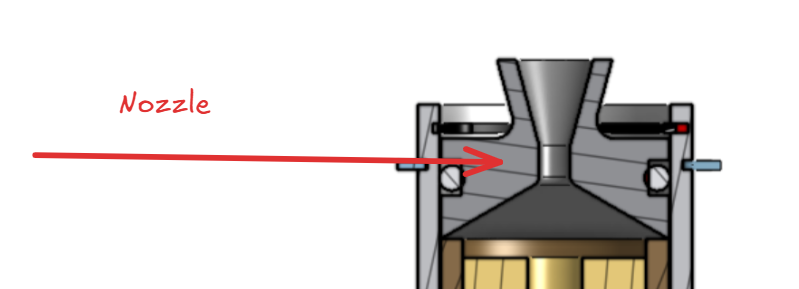
Lets focus on the nozzle (the rightmost part)
A nozzle has a few core components. You have the converging portion, the throat, and the diverging portion.
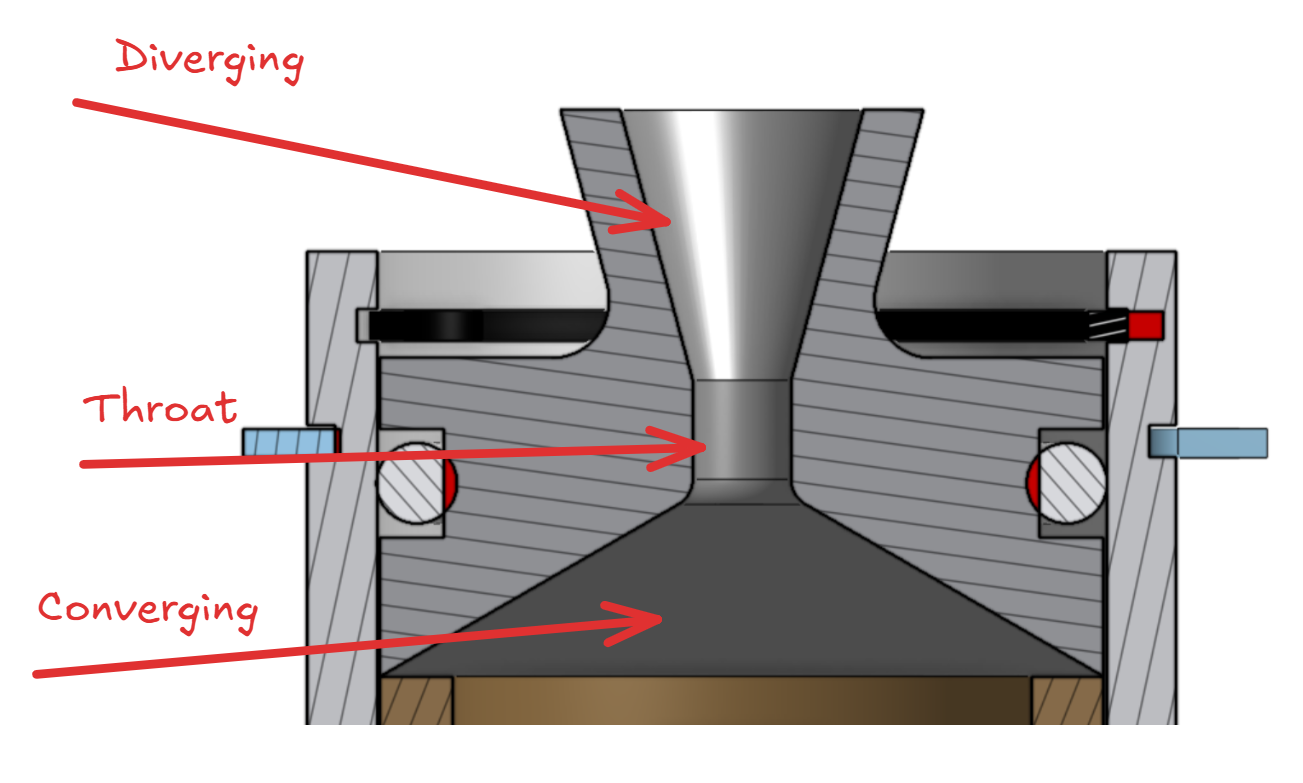
This style of nozzle is referred to as a "de laval nozzle". The reason why there's a converging, or diverging part is actually quite interesting!
If we take a couple steps back as to what a rocket motor is supposed to do, its trying to spit out as much mass as fast as possible to produce thrust. Lets focus on the "as fast as possible" part. How can you accelerate your exhaust gasses? Well we know that a rocket motor acts a lot like a tube pushing a fluid out of one end. fluids? flow? time to talk about fluid mechanics
So the first thing to note about flow, is that we can first assume that any flow that is subsonic (less than the speed of sound) is incompressible. technically this isn't completely true but its incompressible enough that we don't care. And a fun property about incompressible flow is that any volume of fluid that enters a region must exit the region at the same volume. Imagine you poured a gallon of water through a funnel and somehow ended up with half a gallon of water. That same intuition that tells you that can't happen is defined in the continuity equation for incompressbile flow!
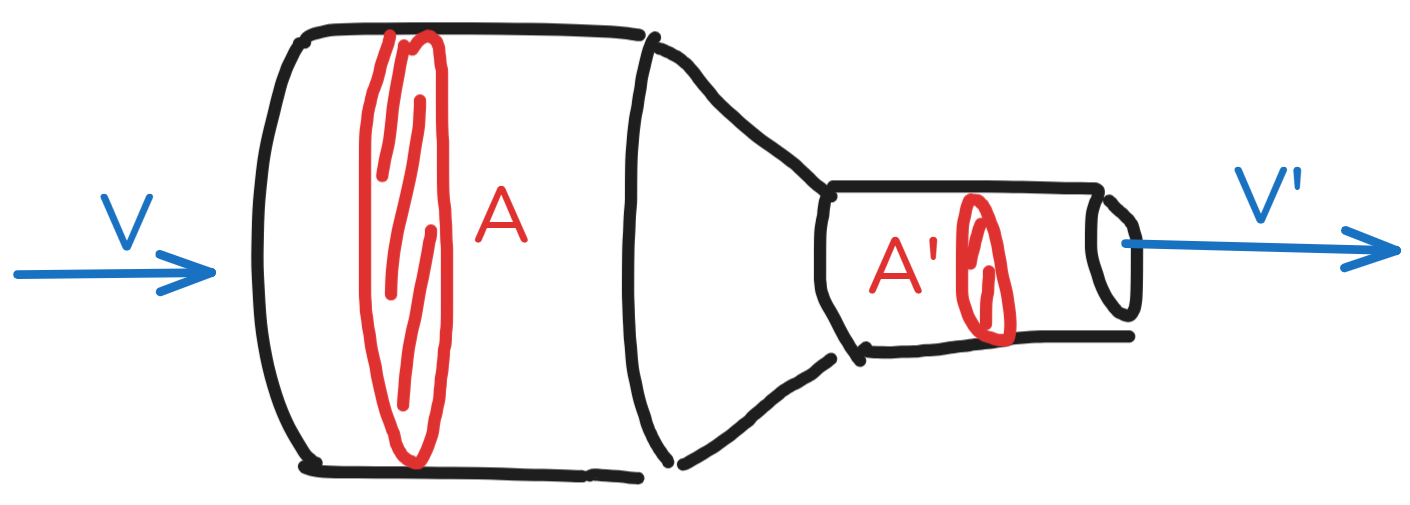
Incompressible flow is governed by the Incompressible flow Continuity Equation: where A is your pipe area, and V is your flow velocity. Lets take an imaginary problem as shown below , that had a pipe area of , Flow velocity of . And lets say you know your output area . Thanks to the continuity equation, we know that . The neat part here, is that by only changing your nozzle diameter we managed to increase our flow velocity from 5 to 10 m/s!! The same applies in reverse, if you increase your area, you decrease your flow velocity.
And to connect that back to our rocket, we had subsonic flow going into our converging portion of our nozzle, and increased the flow velocity significantly! Our goal is to accelerate the flow to the speed of sound within the throat of the nozzle, and we can tune the throat diameter to hit that.
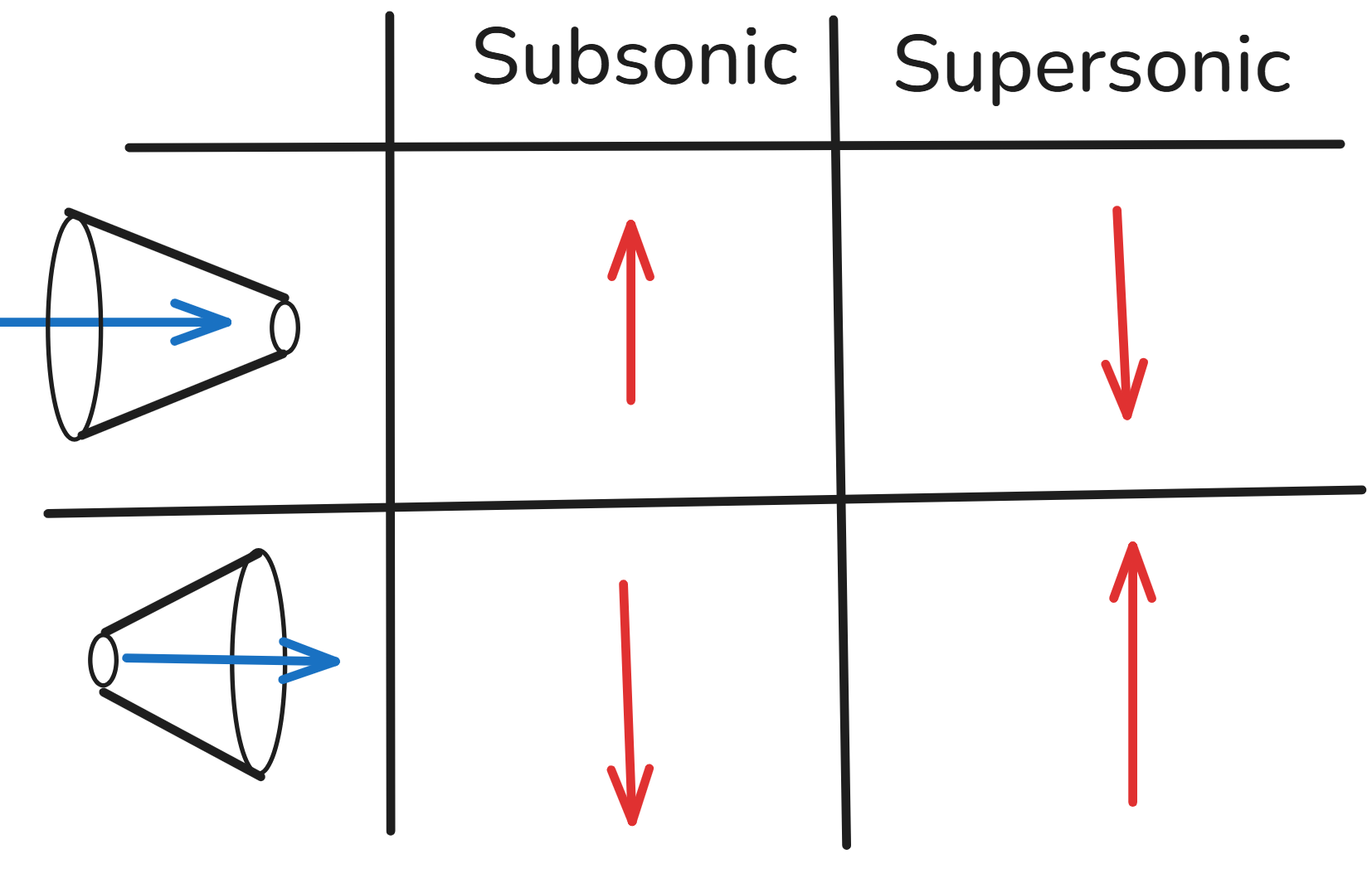
Now we can consult this nifty chart. The red arrows indicate whether the flow velocity goes up or down for a given combination of flow velocity and converging or diverging portion. Note how supersonic is the opposite of subsonic. This is why we want the nozzle to diverge after the throat, so that we can accelerate the already supersonic flow even more. The reason that this change from subsonic to supersonic occurs is because we can no longer assume that our working fluid (air in this case) is incompressible, so we need to go from a conservation of volume assumption to a conservation of mass assumption, along with some other jazz. (The exact point where you can no longer assume incompressible flow is actually when your mach number is > 0.3, but for the sake of readability I am just saying supersonic flow here)
And thats why nozzles converge and diverge!!
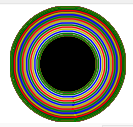
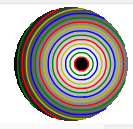
The fuel grain is where all your propellant is, and has some other fun properties that you can size! the simples type of grain (to manufacture and simulate) is a BATES grain. All it really is is just a cylinder of fuel with a bore cut out of the center. Theres lots of types of grains, such as finocyl, or a moon grain. All that changes is what the core of the grain looks like. If you look at the below images ive ordered BATEs, Finocyl, and a moon grain from left to right as an example. You can see how the area thats burning changes as the grain burns down differently. And if we remember that mass generation rate is proportional to exposed surface area, its clear how finocyl creates a huge inital spike that tapers off as it burns through. Whereas BATES and moon grains are a little more progressive, as in the mass generation rate continues to go up as the grains burn through. This is also a gross oversimplification of both the finocyl and moon burner grains, they are incredibly tunable and flexible for different burn profiles, I highly reccomend doing your own research to look into them further!!

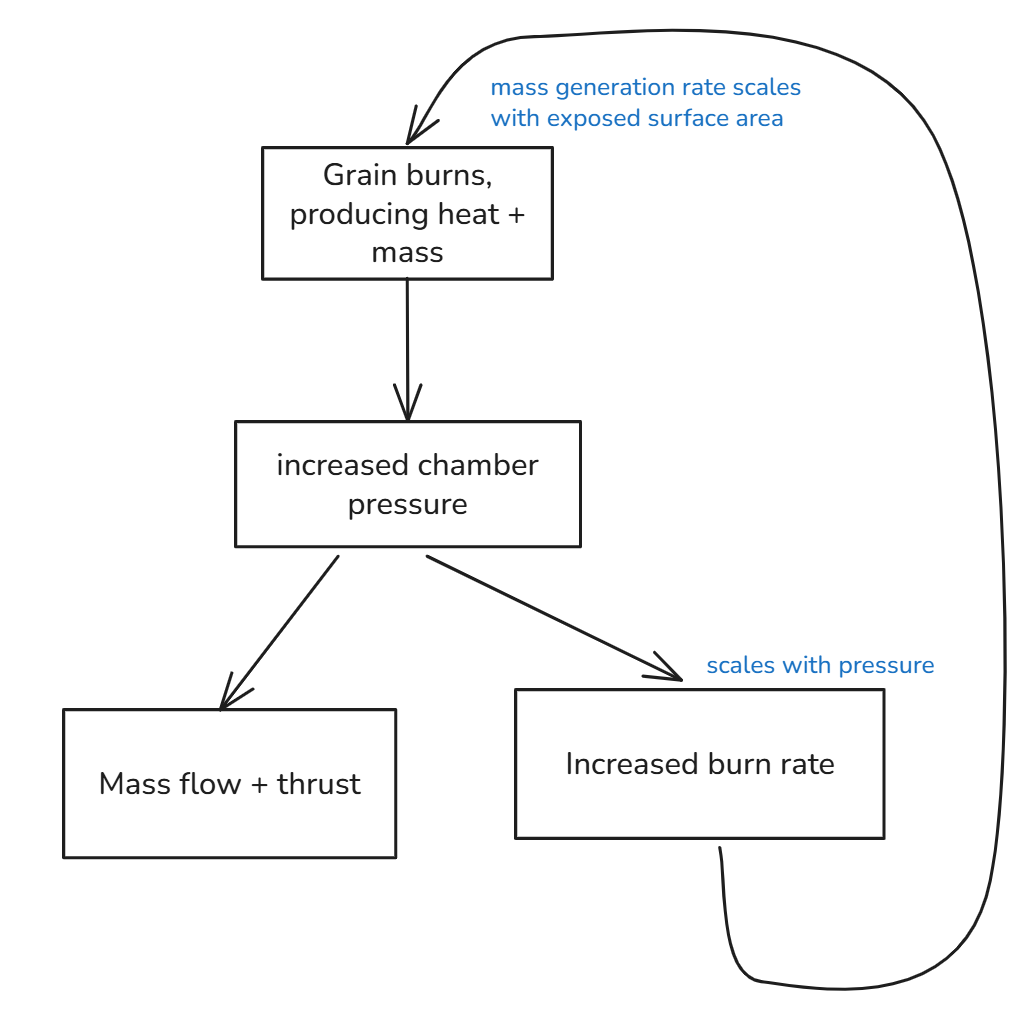
So you might be wondering how all the variables like mass generation rate, chamber pressure, and burn rate all play together. Thats all in what i call the "burn loop". its a positive feedback cycle that starts with the initial combustion in your solid fuel, and goes through the chain of generating some free mass, which then increases your pressure, causing exit mass flow + a higher chamber pressure, increasing your burn rate, looping back to increaseing your mass generation rate, etc etc. And the only thing that prevents a rapid unscheduled dissasembly is the exit flow, which keeps the chamber at equillibrium during your rocket's boost phase!
Continued in a future post!